01
HUMAN AUTHORITY
You remain the final authority over every permission, action and decision.
Intelligence, under your authority.
Aztec is a personal intelligence designed to unite natural conversation, lasting memory and everyday assistance within one private, continuous experience.
Explore the systemAztec is designed as a complete AI-powered personal assistant — able to converse naturally, understand context, remember what matters and provide meaningful assistance over time. Through memory and continuity, it can build on past interactions instead of treating every conversation as a new beginning.
But intelligence is not authority. AI models can understand, reason and communicate, but they never decide or act on their own. Actions, permissions, tools and memory remain governed by Aztec's secure architecture — and, ultimately, by you.
You remain the final authority over every permission, action and decision.
AI can understand and reason, but it cannot govern.
Personal data remains under your control at all times.
Every component receives only what it truly needs to perform its task.
Aztec separates intelligence, memory, identity and capability into distinct layers — each with a clear purpose and a controlled place in the whole.
Permissions, actions and decisions follow traceable rules instead of model initiative.
Models can understand and communicate without becoming the system that controls them.
Structured memory allows useful context to endure without becoming an uncontrolled transcript.
Identity signals establish who may be present; policy decides what follows.
Speech, response and expression form one continuous conversational experience.
Tools remain separate from intelligence and available only after explicit authorization.
Zeus coordinates specialized agents through defined roles, limited capabilities and reviewed results.
Desktop and mobile interfaces connect to one identity, one memory and one source of authority.
Chronos distinguishes what happened from what deserves to endure. It organizes meaningful context across time, people and relationships, allowing each conversation to build on the last without reducing a person to a transcript.
What happened.
What should endure.
Who and what connect.
When context matters.
Where knowledge began.
Only what matters now.
Knowing who may be speaking is not the same as deciding what they may do. Aztec keeps identity evidence, roles and permissions deliberately separate.


A detected voice can help resolve a speaker as Admin, User or Unknown. Recognition identifies; policy determines what each role may access.
A signal that can support identification — never an automatic grant of permission.
Evidence is compared with known context before an identity is considered.
Admin, user and unknown states establish clear differences in access and trust.
What someone may request remains separate from who the system believes they are.
Aztec listens, understands and responds through one continuous conversational core. Synchronized voice, expression and visible states transform that response into a presence you can perceive.
Receive speech as an intentional input.
Connect language with context and memory.
Form a useful answer through the shared core.
Return it through text, voice and presence.
Each spoken response is translated into precisely timed visemes, allowing the avatar's mouth movements to remain synchronized with Aztec's voice.
Aztec transforms its response into speech.
Speech timing drives the avatar's mouth shapes.
Eyes, face and behavior reflect Aztec's current state.
Aztec is not defined by a single model. Cognitive engines can evolve or be replaced while identity, memory, permissions, tools and the system's governing principles remain continuous.
“Aztec is not an LLM with tools. Aztec is a personal system that can use LLMs.”
Privacy cannot depend on a single switch. It emerges from where information lives, how systems are separated and how little context each component is allowed to receive.
Personal context is kept close to the system you control whenever possible.
Sensitive information belongs within deliberate, protected boundaries.
Credentials and private configuration remain isolated from cognitive context.
Only relevant information is retrieved, and only when it serves the current exchange.
Specialization expands what Aztec can accomplish without dissolving responsibility. Aztec receives the request, Zeus coordinates the work and each agent contributes within a clearly defined role.

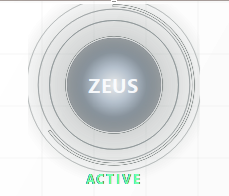

Each agent is assigned a clearly defined area of responsibility.
An agent receives only the capabilities required for its current task.
Every actionable request passes through authorization and system policy.
Zeus returns results to Aztec, where they are evaluated before reaching the user.
Critical situations should never depend on improvisation. Aztec is designed around deliberate procedures for recovery, containment, diagnosis and emergency response.
A dedicated emergency command can stop Aztec at any moment, regardless of the active task. Activation remains bound to a protected phrase and verified administrator voice.
Restarts the Aztec runtime through a controlled sequence, then verifies that every required service returns to a known state.
Places Zeus and every specialized agent offline when abnormal behavior requires immediate separation from cognitive activity.
Performs an extended security inspection for signs of intrusion, alteration, unauthorized copying or host compromise.
When a compromise is confirmed, protected assets can be rendered inaccessible, Aztec disabled and the host isolated from every network.
Audits the complete installation, reports affected components and supports a controlled path toward repair and restart.
A mobile interface can contact emergency services, relay critical information and share the device location when the user cannot respond.
Authorized devices carrying an Aztec interface can be located through a dedicated recovery path.
The smartphone application is designed as a secure relay to the Aztec instance running on the user's PC. It does not create a second assistant or move the core to the phone: it carries the interface, conversation and authorized controls to a mobile screen.
Aztec is being built as a long-term system, with each foundation developed, tested and connected before the next is allowed to depend on it. Current work spans the conversational core, structured continuity, the continued refinement of protocol capabilities and more reliable task dispatch across Zeus and the agent network.
Natural dialogue and reliable local operation.
Chronos, memory and context across time.
Identity, permissions, tools and secure boundaries.
New interfaces and knowledge systems built on stable foundations.